Kitesurf Season in Le Morne, Mauritius: When to Come, Where to Ride, Where to Stay
Kitesurf Season in Le Morne: How to Time Your Trip to the Best Kite Spot in the World
For many riders, kitesurfing Le Morne is a once‑in‑a‑lifetime pilgrimage. A turquoise lagoon, powerful reef breaks, the iconic basalt mountain, and trade winds that blow for months on end – it’s no surprise Le Morne often appears on any shortlist of the best kite spot world has to offer.
But to really enjoy kite Mauritius, timing is everything. The right month can mean steady wind, warm water, smaller crowds, and sessions that feel almost private. The wrong timing can mean lulls, squalls, or battling high-season congestion at the spot and in every hotel.
This guide breaks down the kitesurf season in Le Morne month by month, explains wind and weather patterns, and gives practical tips on where to ride – and where to stay – if you want space, comfort, and that rare feeling of having the lagoon almost to yourself.
Understanding the Kitesurf Season in Mauritius
Wind Patterns: Why Le Morne Works So Well
Mauritius sits in the trade wind belt of the southern Indian Ocean. That means relatively reliable easterly to south‑easterly winds for a big part of the year. Around Le Morne, the mountain itself accelerates and channels this wind, creating a local venturi effect – one of the reasons kitesurfing Le Morne feels so consistently powered when other parts of the island can be marginal.
In simple terms:
- Main wind direction: East to South‑East (cross‑onshore to side‑on at the main lagoon)
- Thermal effect: Stronger in the cooler, drier months (Mauritian winter)
- Average wind range in season: 18–30 knots, with some days lighter or stronger
Two Main Kitesurf Seasons in Le Morne
While it’s possible to kite Mauritius almost all year, Le Morne really has two main kitesurf seasons:
- Primary wind season (Mauritian winter): May to October – strong, consistent trade winds, cooler air, smaller crowds outside school holidays.
- Secondary wind season (summer thermals): November to early January – lighter, but often still very rideable winds, warmer water, more tropical vibes.
February to April is more variable: still kiteable, but with less reliability and more humidity, plus a slightly higher chance of cyclones or low‑pressure systems.
Month‑by‑Month: When to Plan Your Kitesurf Trip
May – The Underrated Start of the Main Season
May is when the trade winds really start to kick in. Statistically, you can expect around 65–75% windy days strong enough for 9–12 m kites if you weigh around 75–80 kg.
Conditions:
- Air: around 24–27°C during the day
- Water: 24–26°C – shorty wetsuit optional for long sessions
- Wind: generally 15–25 knots, building stronger as the month progresses
It’s a sweet spot: good wind, more space on the water than peak months, and calmer on the roads and beaches. Compared to a big hotel Le Morne or a busy resort Le Morne, you’ll notice a much more relaxed atmosphere in May, especially if you stay in a private villa perched above the lagoon, where you watch the wind lines arrive with your morning coffee.
June – Trade Winds in Full Swing
June is when many regulars quietly book their trips. Wind stats often hit 75–85% kiteable days, with plenty of sessions in the 18–28 knot range.
Expect:
- More days on 7–10 m kites for average riders
- Crisp air, with evenings cool enough for a light sweater
- Smaller South‑West swells starting to light up the reef passes
If you’re chasing both lagoon freestyle and your first reef sessions at Manawa or Small Reef, June gives a balanced mix of manageable swell and solid wind.
July & August – Peak Power for Experienced Riders
July and August are the heart of the Mauritian winter and the most powerful part of the kitesurfing Le Morne season. This is when the island delivers those classic photos: stacked whitecaps in the lagoon, spray flying off waves at One Eye, and riders fully lit on 5–8 m kites.
Typical conditions:
- Wind: 20–35 knots on many days
- Air: 22–25°C during the day, cooler at night
- Water: around 23–24°C – shorty or thin full wetsuit recommended
This is an excellent time if you’re intermediate to advanced and want guaranteed sessions. If you’re a complete beginner, it’s still fine – the main lagoon is forgiving – but choose your school carefully, and consider slightly larger kites to cope with the gustier days.
On land, this is also high season for tourism. Many mauritius hotels and Le Morne resorts run near full capacity. If you prefer to avoid crowded breakfast buffets and noisy corridors, consider a self‑catering villa where you can tune out the hustle, cook when you feel like it, and enjoy panoramic views without sharing a pool with dozens of other guests.
September – Still Strong, With a Hint of Spring
September often feels like a softer version of July and August: still very windy, but with slightly milder air and a touch more warmth in the sun.
Why riders love September:
- Plenty of 18–28 knot days
- Good swells for wave riders, but not as heavy as mid‑winter
- A little less crowd pressure than August, especially after European school holidays
If you’re planning your first trip and want the best chance of wind without the feeling of peak‑season mania, September is a very safe bet.
October – The Gentle End of the Main Season
October marks the transition from winter to summer. Wind stats soften a little, but you can still expect plenty of rideable days.
Conditions:
- Wind: often 14–22 knots, ideal for 9–12 m kites
- Water: warming back to 24–26°C
- Air: 26–28°C – boardshorts and bikinis season begins
This is an ideal month for couples and families who want to combine kite Mauritius with swims, hikes, and island exploring. The wind is less intimidating for lighter riders, and non‑kiters in your group can enjoy calm mornings on the terrace and sunset walks on the beach.
November to Early January – Summer Thermals & Tropical Vibes
Once November arrives, the island feels different: warmer, more humid, and more tropical. The trade winds weaken, but Le Morne benefits from local thermal effects and still delivers many rideable afternoons.
Expect:
- Wind: 12–20 knots, often building after midday
- Kite sizes: 11–15 m for most riders
- Water: 26–28°C – pure boardshorts weather
This period suits lighter riders, foilers, and anyone who prefers cruising and learning new tricks over full‑power nuking sessions. It’s also a good choice for mixed groups where not everyone is obsessed with kiting; you’ll have time for morning hikes up Le Morne Brabant, snorkeling, or market visits before the wind switches on.
Over Christmas and New Year, hotels in Le Morne and many hotel Mauritius options are fully booked and priced accordingly. A private villa with a 180° lagoon view can be a smarter alternative: you pay for space and privacy, not for gala dinners and resort entertainment you may never use.
February to April – Off‑Peak and Unpredictable, But Not Impossible
February, March, and April are the least reliable months for wind. You can still get beautiful sessions, but you’re gambling more with the weather.
What to know:
- Wind: 8–18 knots, with some totally calm days and occasional stormy days
- Higher risk of cyclones or strong low‑pressure systems in February
- Very warm and humid – great for swimming, snorkeling, and exploring inland
If you come in this period, don’t make kiting your only goal. Plan a broader Mauritius trip: waterfalls, Chamarel, Black River Gorges hikes, boat trips to Île aux Bénitiers, and lazy mornings on your terrace watching the lagoon shift from glassy calm to turquoise ripples.
Spot Guide: Choosing Your Area in Le Morne by Season
Le Morne is compact, but different micro‑spots work better depending on the month and your level.
Main Lagoon (Beginners & Freeride)
The large, shallow lagoon in front of the public beach is where most schools operate and where many riders spend their first days. In the main season (May–October), the wind is side‑onshore and steady, providing a big safety net: you drift toward the beach, not out to sea.
Best months: May–October, with June–September being the most reliable.
Who it suits: Beginners, freeriders, and anyone looking for flat‑to‑choppy water to practice transitions, jumps, or basic tricks.
Little Lagoon / Freestyle Zone
On the inside, near the sandbank, you’ll find the famous flat‑water area used by many pros and advanced riders. It can get busy in peak months, and the rules and zones set by schools and rescue services should be respected.
Best months: June–September when the trade winds are strongest and most consistent.
Tip: In high season, ride early or late to avoid the midday crowd and get glassier conditions.
Manawa & Small Reef (Wave Riding)
Outside the lagoon, on the reef passes, Manawa and Small Reef offer rolling waves that can range from playful to powerful, depending on swell and tide.
Best months: June–September for more consistent groundswells, though you can score waves outside these months too.
Who it suits: Intermediate to advanced riders comfortable with deep water, current, and reef. Always go with a buddy or with local guidance, especially if it’s your first time.
One Eye (Experts Only)
One Eye is legendary – a fast, hollow wave that breaks over shallow reef, directly in front of Le Morne mountain. It’s one of the reasons Le Morne is regularly named among the best kite spot world destinations for wave riders.
Best months: Winter swells, mainly June–August, with solid trade winds.
Warning: This is not a place to test your limits. Come only if you are a strong wave rider, comfortable with heavy surf and shallow reef, and always respect the lineup and local etiquette.
Practical Tips for Planning Your Kitesurf Trip
What Kite Sizes to Pack
Your quiver will depend on your weight and when you come, but as a rough guide for an 75–80 kg rider:
- May–October: 7 m + 9 or 10 m + 12 m (you’ll probably use the 7–10 m most)
- November–January: 9 or 10 m + 12 m or 13 m
- February–April: 11–15 m if you’re hoping to ride the lighter days
Lighter riders can size down; heavier riders or foilers might adjust accordingly.
Wetsuit or No Wetsuit?
- June–August: Shorty or thin full suit (2–3 mm) recommended for long sessions in strong wind.
- May, September, October: Many ride in boardshorts and a top; a shorty is comfortable if you get cold quickly.
- November–April: No wetsuit needed for most riders.
Crowds, Safety & Schools
Le Morne is a world‑class spot, so it’s no secret. Midday in July or August, the lagoon can feel busy. Some simple strategies help:
- Ride early morning or late afternoon to enjoy more space.
- Book lessons with a reputable local school if you’re a beginner or new to reef breaks.
- Respect the designated teaching and riding zones; they exist for safety.
- Consider trip insurance that covers kitesurfing and potential rescue fees.
Where to Stay for Kitesurf Season in Le Morne
Hotels and Resorts vs. Private Villas
Most riders start by searching for a hotel Le Morne or comparing different Le Morne resorts. Beachfront resorts are convenient, but they come with trade‑offs: higher prices in season, crowded pools, fixed meal times, and that feeling of being in a tourist bubble.
If you’re coming primarily to kite – or to relax in between sessions – a private villa can be a more comfortable hotel alternative:
- More space: Store your kites, boards, and wetsuits without tripping over them.
- Flexible meals: Eat when you want, how you want – especially useful on windy days when you stagger sessions around the tides.
- Privacy: No noisy corridors, no lines at breakfast, no fighting for sun loungers.
Kozy Le Morne: A Panoramic Base Above the Lagoon
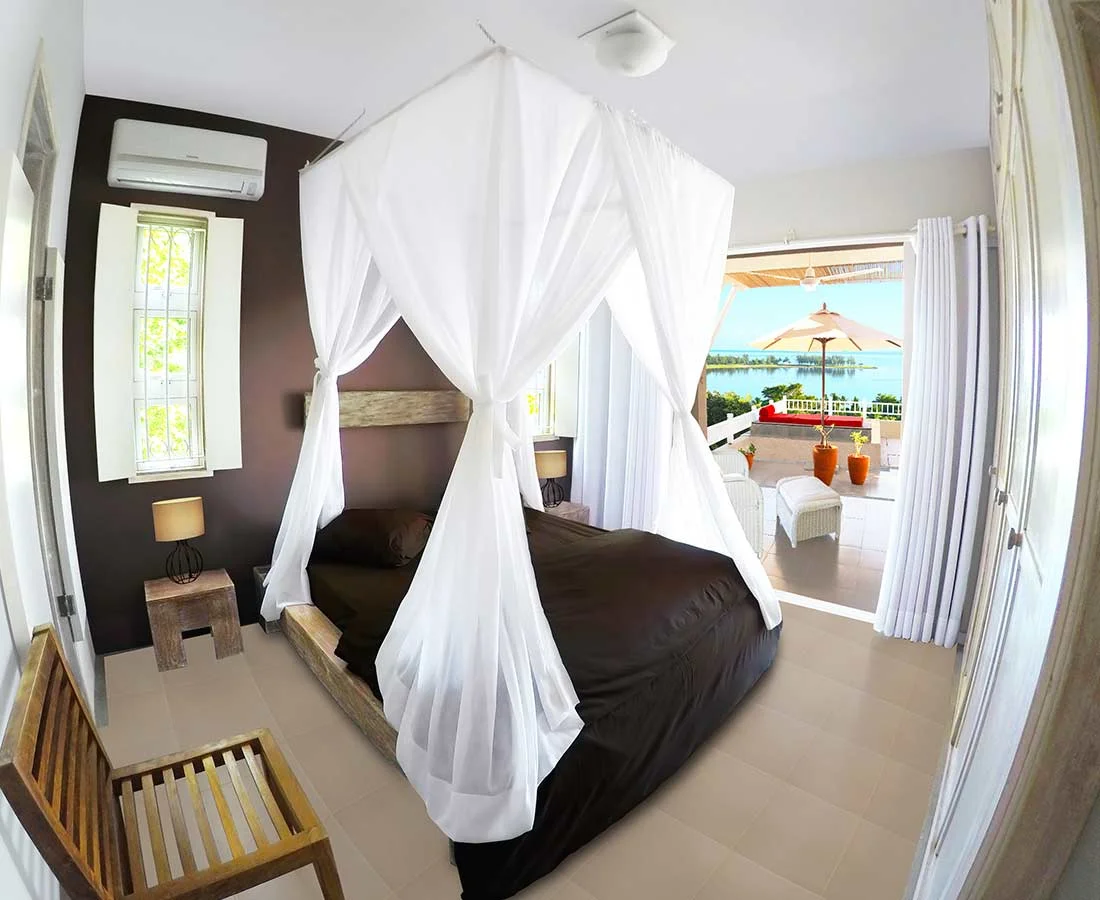
For kitesurfers who want to be close to the action but not stuck in a resort, Kozy Le Morne offers three private self‑catering villas on the hillside above Le Morne, all with 180° panoramic views over the lagoon, Île aux Bénitiers, and the open sea.
Unlike typical hotels in Le Morne, you’re not confined to a single room or hotel balcony. Each villa – the Sea View Villa, Lagoon View Villa, and Island View Studio – has its own terrace where you can literally watch the wind lines marching across the lagoon at sunrise and sunset. Guests often say it’s the most beautiful view they’ve seen in Mauritius, and for kiters, it’s also incredibly practical: you can see at a glance whether it’s a 7 m or 12 m kind of day.
Because Kozy Le Morne is fully self‑catering, you’re free from rigid hotel breakfast times or dress codes. Pick up fresh fruit, vegetables, and fish from local markets, cook when you’re hungry, and structure your day around the tide and wind, not around buffet hours. For many riders, this freedom is as valuable as the wind itself.
If you want to know what other kitesurfers and travelers think, browse the guest impressions on the Kozy Le Morne reviews page.
Location & Access to the Kitesurf Spots
From the villas, it’s a short drive down to the Le Morne public beach and main kite lagoon. Depending on traffic and your exact timing, you can usually reach the launch in around 10–15 minutes. That’s close enough to be spontaneous – if the wind picks up, you grab your gear and go – yet far enough to avoid the busyness and noise of the hotel strip.
Parking at the public kite beach is straightforward outside peak hours; in high season, arriving a bit earlier in the morning helps. Many guests at Kozy Le Morne choose to kite early, come back to the villa for lunch on the terrace with that sweeping lagoon view, and then head out again for a sunset session.
Beyond the Wind: Making the Most of Your Trip
Even during the main kitesurf season, you’ll have lighter days or moments when you want to rest your legs. Le Morne and the surrounding area offer plenty to fill those gaps:
- Hike Le Morne Brabant: A UNESCO World Heritage site with breathtaking views over the lagoon.
- Boat trip to Île aux Bénitiers: Snorkel, swim, and see your usual kite playground from the water.
- Explore local life: Visit the nearby fishing village, small grocery shops, and markets instead of staying inside a gated resort.
- Scenic drives: Black River Gorges, Chamarel, and the southwest coast are all within easy reach.
One advantage of staying in a self‑catering villa rather than a resort is how naturally you slip into local rhythms. You shop where locals shop, discover small eateries instead of hotel restaurants, and watch everyday life unfold beneath you while you sip coffee on your terrace.
How to Book and Prepare
Once you’ve chosen your preferred month – whether it’s the full‑power winds of July, the balanced conditions of September, or the warm thermals of November – lock in your accommodation early, especially if you’re avoiding the big resort Le Morne complexes.
You can check availability and book Kozy Le Morne directly via the official booking section. Because there are only three villas, dates during prime kite season fill quickly, particularly among returning guests who plan their entire year around those reliable Mauritian trades.
For more detailed local tips on kitesurfing Le Morne, off‑the‑beaten‑path activities, and seasonal nuances, keep an eye on the Kozy Le Morne blog, where the team shares on‑the‑ground insights from the southwest coast of Mauritius.
Choosing Your Kitesurf Season: A Quick Summary
- Maximum wind & waves (experienced riders): June–August
- Balanced conditions & fewer crowds: May, September, October
- Warm thermals & cruising: November–early January
- Off‑peak, mixed priorities: February–April (come for more than just kiting)
Whichever window you choose, Le Morne’s combination of wind, water, and scenery is hard to match. Add a private hillside villa with a 180° panoramic lagoon view, and kitesurf season in Mauritius becomes more than a trip – it becomes your annual ritual.
Frequently Asked Questions
Ready to Experience Le Morne?
Book your stay at Kozy Le Morne and discover the magic of Mauritius.
Book Now